You land at Logan at 6:47 a.m. Your first meeting is in the Seaport at 8:00. You’ve got a carry-on, a garment bag, and about forty-five minutes of buffer time that disappears the second you realize the baggage carousel is on the other side of Terminal B. You pull out your phone, open your rideshare app, and watch the estimated pickup time climb from twelve minutes to twenty-three.
Sound familiar?
A few years ago, most business travelers in Boston would have shrugged this off as part of the deal. You budget extra time, you deal with the surge pricing, you hope your driver knows where the hotel entrance actually is. But something has shifted. More and more professionals flying into Boston are skipping the app entirely and booking a car in advance, not because they want to feel fancy, but because they’re tired of gambling with their schedule.
The rise of professional chauffeur service in the city isn’t really about luxury. It’s about control.
The Rideshare Reality Check
Let’s be fair. Rideshare apps solved a real problem. Before they existed, hailing a cab outside Logan on a rainy Tuesday night was genuinely miserable. The convenience was revolutionary, and for casual trips around the city, it still works fine.
But business travel isn’t casual. When your afternoon involves a client lunch in Cambridge, a site visit in Waltham, and a dinner meeting downtown, the cracks start to show fast. Your driver cancels two minutes before pickup. The car that arrives smells like fast food. You’re stuck in the back seat trying to prep for a presentation while your driver takes a wrong turn onto I-93 because the GPS hasn’t updated.
None of this is the driver’s fault, necessarily. The gig economy model isn’t built for the kind of precision that corporate itineraries demand. Drivers are juggling multiple apps, working long shifts, and navigating a city with some of the worst traffic congestion in the country. Boston consistently ranks among the top five most congested metro areas in the United States, and the bottleneck around the Sumner and Callahan tunnels alone can add twenty minutes to a trip that should take ten.
The result? Unpredictability. And for a business traveler whose day is measured in fifteen-minute increments, unpredictability is expensive.
What Boston Executive Transportation Actually Looks Like in Practice
There’s a misconception that booking a private car means you’re paying for champagne flutes and tinted windows. Some services lean into that image, sure. But the reality of modern Boston executive transportation is far more practical and far less theatrical.
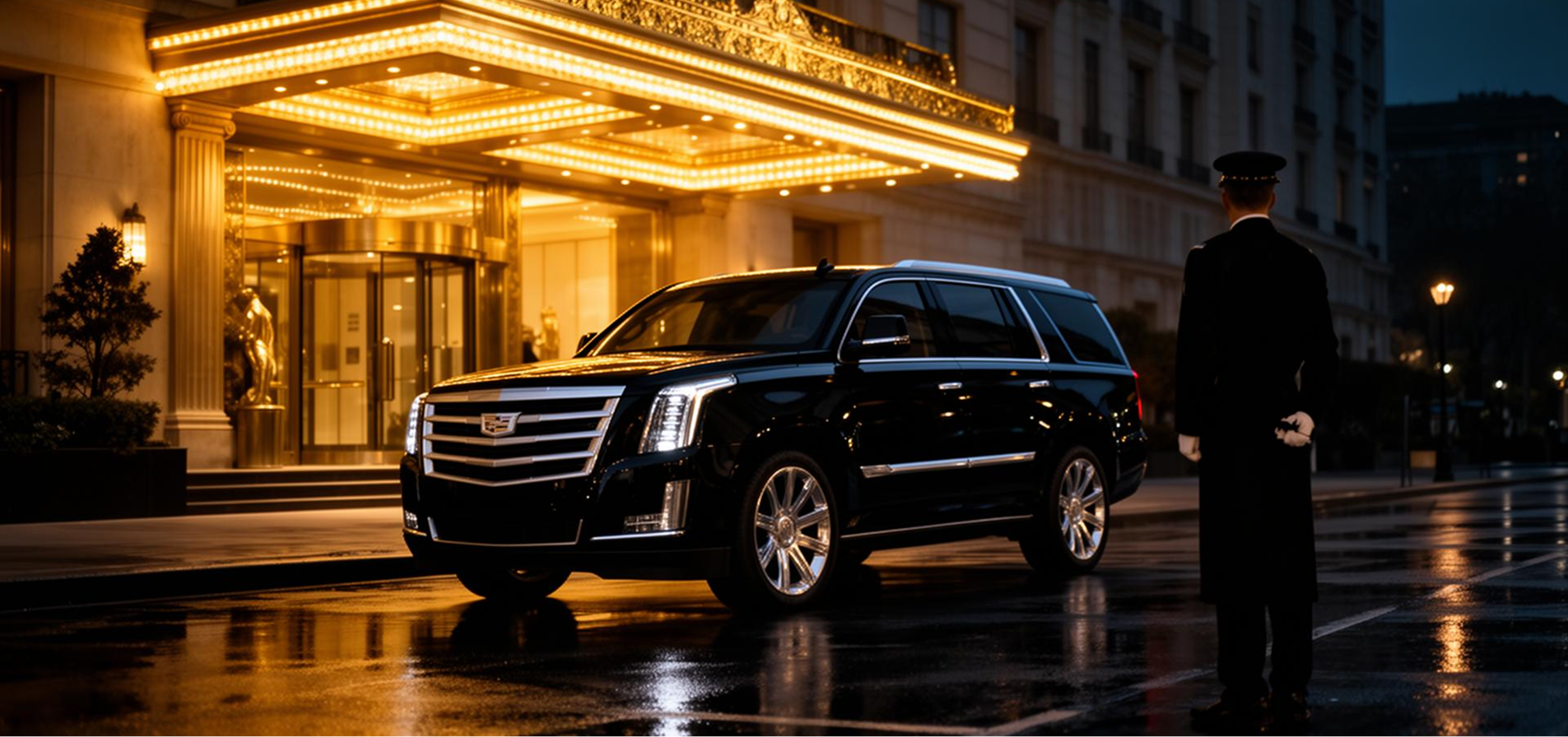
Here’s what a typical morning looks like when you’ve arranged a car in advance. Your flight from Chicago gets delayed by forty minutes. You don’t call anyone. You don’t rebook anything. The dispatch team tracking your flight through FAA data already knows you’re late, and they’ve pushed your driver’s arrival window accordingly. When you walk out of Terminal C, there’s a black SUV waiting at the designated pickup area.
The driver has your name on a tablet, not a crumpled piece of cardboard, and already knows your hotel is on the corner of Boylston and Dartmouth, not the one on Boylston and Exeter.
You get in. The car is clean. The temperature is comfortable. You make two phone calls on the way to the hotel, and the driver doesn’t interrupt once. You arrive twelve minutes before your meeting, not twelve minutes after.
That’s the entire value proposition. No drama. No surprises. Just a smooth, quiet transition from point A to point B so you can focus on the work that actually matters. The car becomes a mobile extension of your office, a place where you can review documents, take confidential calls, or simply decompress between meetings without the background noise of a stranger’s playlist or the distraction of watching someone navigate the Mass Pike for the first time.
The Hidden Math Behind “Cheaper” Options
It’s tempting to compare the sticker price of a rideshare to a pre-arranged car and conclude that the rideshare wins. On paper, a $35 Uber to the Financial District looks better than a flat-rate $85 sedan.
But that comparison leaves out a lot.
First, surge pricing. Boston’s surge multipliers during peak travel windows, weekday mornings, Red Sox game nights, and convention weeks at the Hynes can double or triple a fare without warning. That $35 ride becomes $90 in about four minutes. And because surge pricing is algorithmic, there’s no way to predict it or negotiate around it. You either pay the inflated rate or you wait, and waiting is exactly what your schedule can’t afford.
Second, there’s the cost of a missed connection. If a late pickup causes you to miss the start of a client pitch, the dollar figure attached to that failure dwarfs any transportation savings. You can’t expense a blown first impression. A fifteen-minute delay might seem trivial until it cascades into a rescheduled meeting, a missed flight connection, or a client who quietly decides your team isn’t as sharp as they thought.
Third, consider the mental bandwidth you’re spending managing logistics. Every minute you spend refreshing an app, texting a driver, or re-routing a trip is a minute you’re not reviewing your deck, answering emails, or mentally preparing for the next meeting. Over a three-day trip, those minutes add up to hours of fragmented attention that erode your productivity in ways that are hard to quantify but impossible to ignore.
When you factor all of that in, the price gap narrows considerably, and in many cases, it flips entirely. The flat-rate model also makes expense reporting dramatically simpler for anyone managing a corporate travel account, since the number on the receipt is the number you were quoted.
Five Signs You’ve Outgrown Rideshare for Work Travel
Not everyone needs a private car for every trip. If you’re flying in for a single meeting and heading straight back to the airport, a rideshare might be perfectly adequate. But if any of the following scenarios describe your typical Boston trip, it might be time to reconsider.
- You’re managing a multi-stop itinerary.Three or more locations in a single day means three or more chances for a rideshare to fall through. A dedicated driver stays with you for the entire run, eliminating the dead time between rides.
- You travel with sensitive materials.Laptops, prototypes, legal documents, confidential client files- these aren’t things you want sitting in the trunk of a stranger’s personal vehicle while they pick up another fare.
- You need to work during transit.Taking a call, reviewing contracts, or prepping for a presentation requires a quiet, predictable environment. Rideshare back seats are rarely any of those things.
- Your schedule changes frequently.A good corporate chauffeur company Boston rely on will have live dispatchers who can reroute your driver in real time when a meeting runs long, or a flight gets diverted. Try getting that level of flexibility from an algorithm.
- You’re traveling with a team.Coordinating four separate rideshares for a group of colleagues is a logistical headache. A single SUV or business van keeps everyone together and on time.
What to Look for When Choosing a Provider
Not all car services are created equal, and the premium end of the market has its share of operators who overpromise and underdeliver. When you’re evaluating a professional chauffeur service for your Boston travel, focus on the operational details rather than the marketing language.
Ask about driver vetting. Are chauffeurs background-checked, drug-tested, and trained in defensive driving? Do they know the city well enough to navigate around construction on the Central Artery without relying solely on GPS? Boston’s street layout is notoriously confusing; a clean grid in the Back Bay gives way to a tangle of one-way streets downtown, and a driver who doesn’t know the difference between the Pike and I-93 can cost you precious minutes.
Ask about fleet standards. “Luxury vehicle” can mean a lot of things. You want late-model cars that are inspected and detailed before every trip, not a ten-year-old sedan with leather seats and a fresh air freshener.
Ask about communication. The best services give you a real human to talk to at any hour, not a chatbot or an automated email system. When your 10 p.m. flight gets canceled, and you need a car at 6 a.m. instead, you want to pick up the phone and reach someone who can actually help.
And ask about pricing transparency. Flat-rate quotes with no hidden fees, no toll surprises, and no surge multipliers should be the standard, not the exception.
The Bottom Line
Business travel is stressful enough without adding transportation uncertainty to the mix. The professionals making the switch to private car service in Boston aren’t doing it for the status. They’re doing it because they’ve done the math, on time, on money, and on mental energy, and the numbers point in one direction.
If your next trip to Boston involves more than a single round-trip to the airport, take a few minutes to compare what a dedicated car would cost versus the rideshare roulette you’ve been playing. You might find that the upgrade is more practical and more affordable than you assumed.
Ready to see what a smoother arrival looks like? Everest Executive Transportation offers flat-rate Boston executive transportation with flight tracking, 24/7 dispatch, and professionally trained chauffeurs who know this city inside and out.
Book your next ride and spend your energy on the meeting, not the commute.
Frequently Asked Questions
How is a professional chauffeur service different from Uber Black?
Uber Black offers nicer vehicles, but the operational model is the same as standard rideshare. Drivers are independent contractors juggling multiple apps, and there’s no flight tracking, no dedicated dispatcher, and no guaranteed vehicle consistency. A true professional chauffeur service assigns a vetted driver to your itinerary, monitors your flight in real time, and provides a single point of contact for any changes throughout the day.
Is Boston executive transportation only for C-suite executives?
Not at all. While the name suggests a narrow audience, Boston executive transportation is used by sales teams, consultants, attorneys, visiting investors, and anyone whose schedule demands reliability. If your time has a measurable value, the service makes sense regardless of your title or seniority level.
Can a corporate chauffeur service Boston companies use handle multi-city itineraries?
Yes. Many providers, including Everest, coordinate long-distance routes between Boston and cities like New York, Providence, Hartford, and Washington, D.C. A corporate chauffeur service Boston professionals trust will manage the entire itinerary under one booking, so you don’t have to arrange separate cars in each city or worry about handoffs between drivers.
What happens if my flight into Logan is delayed?
Reputable services track your flight through FAA data and adjust your driver’s pickup time automatically. You don’t need to call or rebook. When you land, whether that’s thirty minutes late or three hours late, your car will be there waiting, and the flat rate you were quoted won’t change.
Do I need to tip my chauffeur?
Gratuity policies vary by company. Some services include it in the flat rate, while others leave it to the client’s discretion. When you book, ask upfront so there’s no awkward moment at the end of the ride. At Everest, pricing is transparent and all-inclusive, so you’ll know exactly what you’re paying before the trip begins.